Showing posts with label chinese medicine. Show all posts

Wednesday, August 14, 2013

Top 5 Spices for the Next Generation of Comfort Foods

Here's the thing about comfort food. Usually, the reason it's "comforting" is that it's so heavy and rich and full of fat, that it wraps your mind in a soothing fog that briefly helps you forget your troubles. Sometimes, we all need a dose of this type of comfort. But the so-called comfort foods, like fried chicken, lasagne, onion rings, mac n' cheese, or (my favorite) stuffing, tend to rely on fat rather than flavor for their appeal. I like to think that I've mostly evolved past falling for this trick, although I will occasionally give in to a craving for something heavy and rich. However, I've also learned to seek comfort in much healthier food, ever since I discovered the wonderful world of spices.

Growing up, vegetables were something to be suffered through. They were flavorless filler on the plate, served for nutritional value and nothing more. I don't blame my mother for her lack of ingenuity when it came for preparing veggies; she comes from a Swedish background where salt, pepper, and dill are primarily the only seasoning to catch on. I can envision my grandmother's spice rack with its set of Schilling brand powdered spices, untouched since the 70's. I still love my grandmother's cooking, but I'm not sure how she pulls it off. My guess would be butter, and lots of it.

When I became a vegetarian (and now, as a pescatarian) I had to quickly learn how to blend flavors together so that our staple meal (vegetables, protein, and some kind of starch) wouldn't become boring when served night after night. While going to school for Chinese medicine, I was excited to learn that certain spices have medicinal qualities as well.

Here are my top-5 favorite spices, their uses, and a little bit about what they do for you!

 Cinnamon


In Chinese medicine, Cinnamon is a go-to herb for fighting off colds and infections. It's also a so-called blood mover, relieving pain and preventing clots (aka: blood stasis), aiding in the prevention of heart disease. These effects have recently been backed by modern research, and it's also known to help stabilize blood sugar. I add cinnamon to pretty much everything, especially Southwest or Mexican-inspired dishes, like chili, for it's hint of smokey sweetness. Many of my mornings start with oatmeal that has been heavily spiced with cinnamon.

Garlic


Most people already know about the wonders of garlic. It is antimicrobial, meaning it fights infections, and its chemical constituents can regulate fat formation and reduce inflammation. It also helps relax the blood vessels to reduce hypertension. Nutritionists recommend using garlic in at least one meal a day to maximize it's benefits. Again, I find that garlic helps boost the flavor of pretty much any meal I make, and it's part of nearly every sauce I throw together. However, I am a garlic-lover and not everyone is in that same boat. Roasting or boiling garlic before you add it to your dish will help reduce its pungent bite.

Ginger


Ginger is ubiquitous in Chinese herbal formulas, used fresh, dried, powdered, juiced... even applied to skin and hair. The reason it is included so often in formulas is because of its ability to soothe the intestinal muscles, prevent gas and stop nausea, thereby making the other herbs easier to digest. It has been proven effective as a preventative against motion sickness, morning sickness, and other conditions where vomiting is a symptom. Its anti-inflammatory properties are currently being studied and there are big implications for arthritis sufferers. Ginger is at home in Asian-inspired dishes. It is not a flavor that hides in the background, so you kind of have to build the rest of your meal around it. Or, you can always have a cup of ginger tea or a capsule of powdered ginger if you're not a fan of ginger-based dishes (sorry, gingerbread doesn't count!).

Hot Peppers


Spicy peppers contain a chemical called capsaicin, which acts on the pain and heat receptors in our mouths (or eyes, or noses, if we're unlucky!). Even though it seems counter-intuitive, this chemical actually reduces inflammation and has a positive effect on the sensory nerves. Studies have found that rats fed a diet containing spicy food suffered less from arthritis symptoms and neuropathy. It also lowers the risk for Type II diabetes and obesity. Furthermore, spicy foods make you eat slower and induce the release of endorphins, which can leave you feeling satiated after a meal without having to add a ton of fat. If you feel like you can't handle much spice, the trick is to build up a tolerance slowly. Try adding just a few pepper flakes to your meal, then keep upping the ante. You don't need to be sweating to get the full benefits, but you should feel a little bit exhilarated when you put the fork down!

Basil


There is no flavor quite like basil. For me, it is the quintessential smell of summertime, and I rarely include it in my cooking during the months I can't go out and pick it fresh from my garden. It has antimicrobial, anti-inflammatory and anti-oxident properties. Its smell also has a positive effect on mood. The same can be said for many of the other herbs that are commonly used fresh: oregano, rosemary, sage, etc. I add basil liberally to pizzas, Italian sauces, and Asian-inspired stir-fries, and I also bake it into bread, put it on sandwiches, and eat it up with plain tomatoes. 

The bottom line is this: herbs and spices tell our brain "this tastes good!" and add to the satisfaction we feel when a meal is finished. When we add flavor, we can cut down on fat and still keep a meal interesting. This helps prevent us from reaching for a snack an hour later.

Want to know more? Here's the site I referenced for compiling this list! The World's Healthiest Foods.

Thursday, August 1, 2013

Happy Lammas Day!


In Minnesota, we jam so much activity into these few short months of summer that it seems as soon as we have a moment to breathe, there's already frost on the ground. I'm sure I'm not the only one who turned the page of the calendar today, totally amazed that it's already August first!

In my garden, we're picking beans, zucchini, and a second round of sugar snap peas that have been appearing on the otherwise dead-looking vines as if by magic. The kale is still going strong, even after repeated pickings that started in May, and we're getting our first few tomatoes. On the whole, my garden has fulfilled my needs: I've been able to supplement our meals with fresh, pesticide-free produce that has been doted on from seed to harvest, and it's been providing me with the "soil time" I need: giving me the satisfaction of tending the tiny piece of land that's been entrusted to me.

However, this garden of also mine serves as a reminder of the fact that I am not, and probably never will be, capable of feeding myself on what I alone can produce. To keep a garden that would sustain just myself and my husband might be possible on our city lot, but to manage all of the logistics would mean a major lifestyle change for one of us, unless I can find a job that will let me take days off for all the canning, planting, drying and harvesting that would be required to see us through the winter.


Today is Lammas, the pre-Christian holiday celebrating the official start of the harvest season. Regardless of your faith, I think it's a great day to pay homage to the food we eat, and everything that goes into bringing that food from seed to table. The sad reality is, most of us wouldn't know how to feed ourselves if society suddenly collapsed one day; many of us don't pay much mind to the food we're putting in our mouths at any given mealtime. But even that bag of Doritos started as an ear of corn, which relied on soil, sun, and water to grow. Even though it might feel weird to say "grace" over a bowl of Doritos, the delicate balance that allows life to exist on this planet is worth being thankful for.

Chinese Medicine is based on Taosim, which teaches us that we are all part of one great reality; things cannot and should not be separated. By this logic, whatever we do to the earth is the same thing we do to our own bodies. Today is a day to remember that, especially as we eat. Eating mindfully and thankfully also helps us slow down and therefore eat less, make smarter choices, and feel more satisfied. A fresh carrot eaten on a picnic blanket beneath a shady tree will be far more pleasurable than a Big Mac scarfed down behind the wheel of your car, I guarantee it!

Bread is the traditional food of Lammas, as corn and wheat are traditionally harvested at this time. However, many people are intimidated by yeast breads, and gluten sensitivities make wheat-based breads problematic for so many. So, here's my favorite recipe for banana bread! It is (relatively) healthy, and if you're willing to add dark chocolate chips, it will satisfy your dessert craving while giving you a lot of nutritional bang for your buck!


Lammas Day Banana Bread 
(adapted from this recipe)

Dry
1 1/2 C whole wheat flour (or gluten-free alternative)
2 t baking powder
1/4 t baking soda
2 T flaxseed meal (this is the secret ingredient!)
2 T corn meal
1 t cinnamon
pinch salt

Wet
1/4 t almond extract (optional - I am obsessed with almond extract!)
1/4 C vegetable oil (can sub applesauce)
1/2 C Brown Sugar
1 C mashed bananas (about two whole bananas)
1/2 C Milk (or water)

1/2 C Chopped Nuts and/or chocolate chips

Preheat the oven to 350.

Mix the dry ingredients in a small bowl. 

Smash the bananas in a larger bowl and add wet ingredients, mixing until well-blended. 

Add the dry ingredients to the wet, a little at a time, mixing all the while. Add the nuts and chocolate chips if you'd like.

Pour into a greased loaf pan and bake 35-45 minutes, or until a toothpick inserted in the center comes out clean.


Thursday, May 23, 2013

Gardening your Business

I've been meeting a lot of women lately that are also in the process of building their business. I've found that the favored metaphor for building a business is building a house. Authors write about laying your foundation, putting up the frame, et cetera and so on. However, since I'm not much of a carpenter, I find myself thinking of my own business as a garden. Every day I try to plant a seed, through networking, blogging, putting up a flyer, that will hopefully help my business grow. I also tend to what I've already planted, by contacting the people I've connected with or taking the time to brush up on my knowledge of Chinese Medicine.


Gardening - and I mean actual gardening, not the metaphoric kind - has become sort of a meditation for me. I think of my growing business whenever I plant a new seedling, and I feel like it's helped me clarify some of the lessons I've heard repeated by my mentors and teachers throughout this process. Here are a few things I've learned.

When in doubt, go for a sure thing. When I first started gardening, I loved the idea of growing things that nobody else had - rare herbs, strange fruits, weird heirloom varieties that were on the brink of extinction. I ended up with a lot of things that didn't even sprout, or weren't suited for my climate, or yielded one or two sad little fruits after taking up valuable space in the garden. There's a reason why certain things are popular - they work! I find this applies to my business as well. We're always being told to "think outside the box" and dream up some new way of doing things, and yes - a certain amount of experimenting can pay off. But there's no shame in investigating what your peers are doing (how they're marketing, what services they're using, how their websites are laid out) and then adding your own personal touches.

I buy the same seed mix for lettuce every year from Pinetree Seeds. It's always the firs thing I plant.

Don't take on too much at once. Looking at the seed catalogs when they arrive in January, I get the itch to buy just about everything I see. I always have to remind myself that I have limited resources, and if I plant too much at once I'll get burned out. It's better to make a more modest start and be able to fully tend to your small plot than find yourself strapped for time, cash, and energy, letting everything get taken over by weeds. There will be time to take on more next season.

Lady's Mantle, or Alchemilla. Any easy-care, attractive perennial with medicinal qualities.

Invest in perennials. An asparagus bed takes 8 years to get established, but once it does it requires very little care. Likewise, strawberries rarely yield the first year, but are one of the first and most reliable things to come up once the snow melts in the springtime. If you're planning on being in business for years to come, it's best to think in the long-term. Maybe you place an ad or run a promotion that doesn't exactly pay off right away, but you never know when someone will need your service and happen to remember your name, months or ever years later. You never know when a seed you planted will suddenly bear fruit.

"Provider" Bush beans ready to be transplanted

Don't give up on the runt. On the same token, don't give up on something just because it's looking a little scraggly. I've heard again and again that consistency is key when it comes to starting a business. For instance, maybe you're having misgivings about the location you chose. It takes a long time to start getting clients in the door, and when you decide to pick up and move, you're basically starting over at square one. As someone who's always tempted to move on to the "next big thing," I often repeat this as my mantra: "When you want to reach water, it's better to pick one spot and keep digging than to dig 100 shallow holes." Give things a proper chance to run their course, and you're more likely to be rewarded.

I almost gave up on my tulips this year - they came up much later than the other tulips around the neighborhood! But lo and behold, they popped up just in time for the gorgeous spring weather

There's only so much you can do. At the end of the day, you have to trust that the seed, the soil, and the sunshine know what they're doing. Same goes for marketing - sometimes you just have to toss your seeds into the wind and hope for the best. There's no use fretting over what you can't control.

So that's the metaphor that works for me! Do you have any good ones?

Thursday, April 25, 2013

Finding the Motivation to Get Motivated

In spite of my best efforts to stay "in the moment" today, my mind keeps wandering to thoughts of summer and - naturally - riding my bike. In Minneapolis, we love to bike and many of us do it in all kinds of weather, but I'll admit that my bike is more of a "fair weather friend." Although I can generally handle the cold, I'm not much for navigating the ice floes that form along our residential streets during the winter.

I'm eager to get back out there to explore my neighborhood on two wheels. I'm also thinking that this is the year I finally tackle some longer rides and get out of the city a bit. I'm excited to start to build up my endurance and get back in shape after this long, long winter hibernation. Admittedly, I haven't been so great about keeping up with my exercise routine this winter, and I'm trying to find the motivation to get up and start being more consistent.

Here are some quick tips - and web resources - that I've found from my own experience and others' advice that will help you build your motivation to whip yourself into shape.

1. Have a goal. Make it as concrete as possible, with a specific deadline. Most people can have the best intentions ("I want to be healthy for my children," "I want to feel better about myself," etc.), but such vague - albeit well-meaning - goals can be tough to measure and it's hard to know when you actually get there! Make it quantifiable: it can be a certain amount of pounds you want to lose by a certain date, or that you want your cholesterol and blood pressure to be down to a healthy range by your next doctor's visit, or that you want to be able to run a 5K. There's a fantastic website called 43things.com that is all about goal-setting. You can create a list of as many as 43 goals, then post entries about your progress and interact with people who are working on the same goal as you. It's awesome!


2. Create accountability. So let's say you want to run a 5K. Find out when there will be a 5K in your area and sign yourself up. Tell everyone you're doing it. Invite friends to come see. By the time you've done so, you'll definitely be motivated not to back out. You can also hire a personal trainer or health coach to help keep you on track - there are a lot of great people out there doing this good work, and you can surely find someone you'll be happy to work with. Here's a website where you can find the top-rated health coaches in your area.

3. Do something you actually enjoy. If someone comes into my clinic and says, "I want to get in shape, but I hate working out," I ask them, "What do you like to do that's active? Anything?" Usually I can draw out at least one thing that the person enjoys doing that also gets their heart pumping. Then I say, "Do more of that!" You don't have to start lifting weights and doing squats to be healthy and do your body a lot of good. You can improve your health and increase your lifespan by doing just 15 minutes of cardio a day! It's unlikely that you'll be shedding pounds quickly or getting six-pack abs at this pace, but everything helps. Just pick what you like to do and do it for a half-hour every day - walk, bike, dance, chase your dog, garden, swim... If you find something you like to do, you'll start to look forward to doing it!

Hiking is better with a few dozen of your best buds!

4. Buddy up. You may notice that while some of your friends are wonderfully supportive of your efforts to get healthy, others seem almost determined to steer you woefully off-course. And with so many of our social gatherings revolving around food and drink, swearing off your vices can make you feel like a social pariah. As a response to this, my friend created an awesome group called Buds of Spring, in which he asked his friends to join him in taking a month-long pledge to exercise for 30 minutes a day and abstain from alcohol, coffee, and smoking for one month. From March 20th to April 20th, he hosted fun events, posted encouraging words and member profiles on social media, and even got sponsors. This year - their 3rd - 150 people took the pledge! Try reaching out to your own friends to join you in taking a similar pledge. Even if it's just two of you sharing recipes and workout tips on Pinterest, at least you won't feel so alone!

A little donut burger action for your "cheat day." Why not, if you've been doing everything else right?

5. Reward yourself. When something is forbidden, it gains a certain power over us. This is why I hate fad diets that are built around the central concept that one food group must be completely avoided. At no point will that food hold such an allure as when you know you can't have it! It's better to teach yourself to enjoy things in moderation. Pick one night a week where you will go out for a glass of wine (or whatever your chosen weakness may be), and a really nice dinner. Or take a walk with the kids to the ice cream store on Saturdays and indulge in the good stuff. Make it a ritual and really enjoy every bite. You will feel so much more satisfied if you eat one chocolate eclair with complete presence of mind rather than sitting in front of the TV snarfing down an entire bag of chips. 

These tips are just the beginning. What have you learned about staying motivated to work out? 

Thursday, April 11, 2013

Get your Greens!

Even though, as I write this, we're in the middle of an April blizzard, I know that salad green season is right around the corner. Spring turns every backyard into a salad bar with nettles, dandelion, and my very favorite, lambs' quarters, there for the picking. But I have a confession to make. Even though I'm a (mostly) vegetarian, I don't like salads. Very occasionally, I'll find a salad that speaks to me, but for the most part I always feel unsatisfied after eating what essentially amounts to a big bowl of leaves.

What could be prettier than a whole mess of colorful veggies mingling in a cast iron pan?

I like to justify my salad aversion by saying I'm living in accordance with traditional Chinese medicinal teachings, which assert that all food should always be cooked before eating. I know this concept opposes what so many of us have been taught, which is that raw food has more vitality and cooking destroys vitamins in vegetables. From a TCM point of view however, it is taxing for the digestive system to process cold or raw food, and for those of us whose constitution tends towards energy deficiency, we may not be able to adequately break down and absorb food that hasn't been cooked first. Cooking basically begins the process of digestion in the pan - warming the food to body temperature, breaking it down and unlocking all the goodness so our body can absorb it without expending precious Qi.

This article in Scientific American confirms some of what TCM doctors have been saying for thousands of years: cooking vegetables breaks down their cell walls, making many of the vitamins within them easier for our bodies' to absorb. However, there is a trade-off in some cases; while it tends to boost the bioavailability of some good things, like lycopene in tomatoes and beta carotene in carrots, cooking can lower veggies' levels of some vitamins, like vitamin C. The conclusion? A mixture of cooked and raw fruits and veggies in your diet increases your chances of getting the full spectrum of nutrients from your food.

Well, I know from experience that raw greens - shall we say - "disagree with me," and I've had many patients report the same thing. I also just don't find them palatable, and ultimately the trick to eating more vegetables is to find ways to prepare them that make them appealing to you.

So I've done some experimenting over the years and here are:

Five great ways to sneak greens into every meal without settling for just a salad

Steam them: Kale, chard, and other varieties of greens that are tough or bitter in their raw form become sublime when you steam them just for a minute or two. It's quick and rounds out any fish or meat dish better than potatoes (nutritionally, anyway), or you can serve them with rice and call it a (light) meal. Our favorite way to prepare them is this:

1. In a deep frying pan with a lid, saute a clove of minced garlic in a little sesame oil for about a minute
2.Turn off the heat and add a little water, enough to fill the pan to a depth of about one finger breadth, and bring to a boil
3 Add your greens, broken up into bite-sized pieces of course, and cover. Lower the heat to a simmer and steam for 2-5 minutes, until the leaves are bright green and just wilted.
4. Meanwhile, combine 1 T soy sauce, 1 t brown sugar or honey, 1 t rice or balsamic vinegar, and a good pinch of sesame seeds or any other ground nuts (they're even better toasted)
5.
Strain off any excess water that remains and then toss with the soy sauce mixture


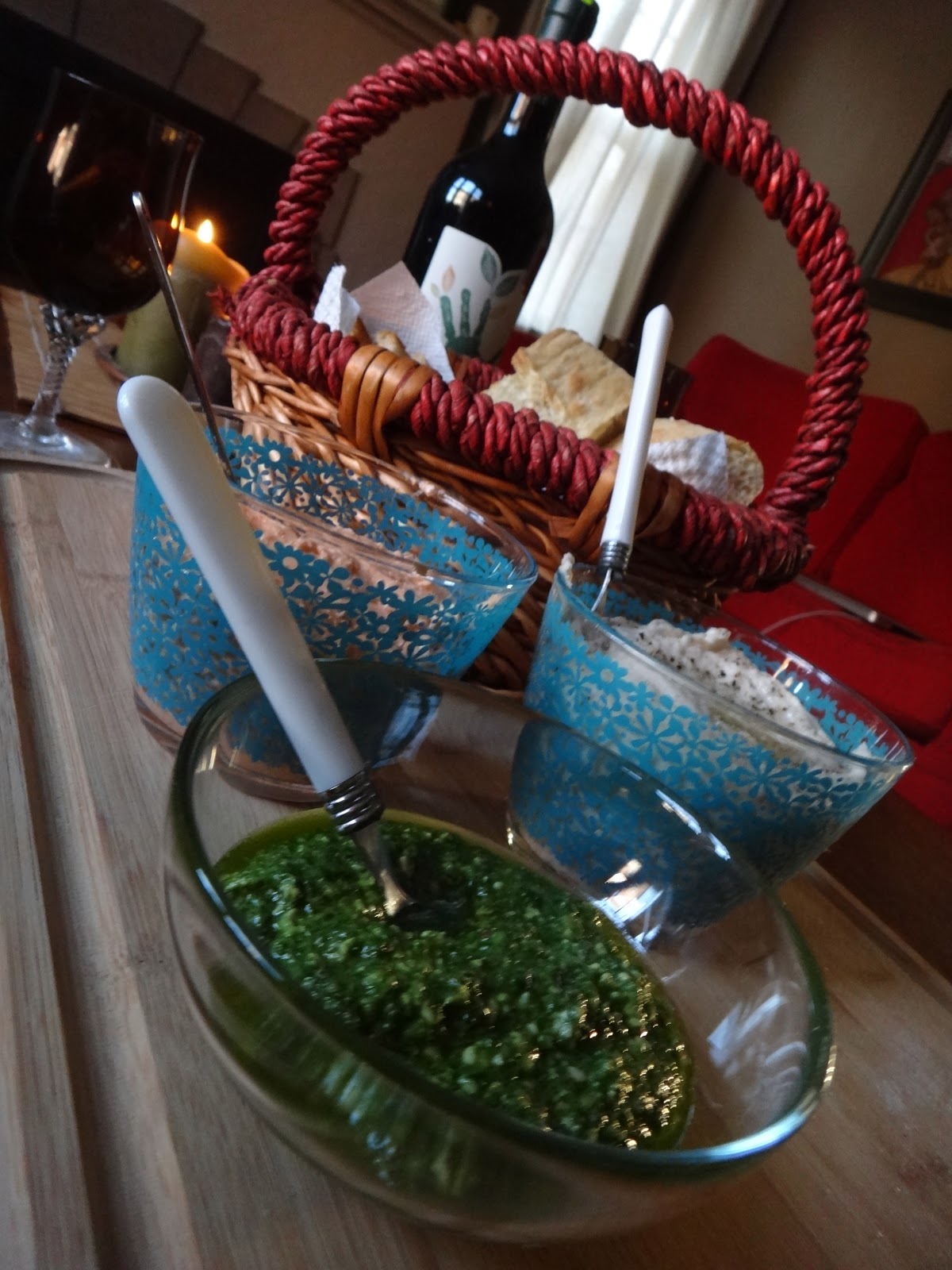
Sunny spinach, almond and lemon pesto

Make a pesto: I don't know what the actual rules are regarding pesto, but as far as I'm concerned "pesto" consists of the following: any green leaves, nuts, and oil blended into a paste. Basil + pine nuts + parmesan and olive oil is most traditional, but any time I have some salad leaves that are getting to be a little past their prime, I make a pesto with whatever's lying around. Then you can add a wallop of concentrated greens to virtually anything - I made this and spread it on frozen pizza last night:

- 2 C spinach leaves
- 1 clove garlic
- 1/2 C almonds
- 2 T parmesan, grated
- 1 t lemon juice
- Approx. 2 T olive oil

Combine the first five ingredients in a blender or food processor, slowly adding olive oil until everything is blended to a fine paste. Add salt to taste.

Add them to pasta: Dandelion greens, arugula, and spinach are fabulous mixed into red sauce - just add to the sauce in the last minute or two of cooking. Beet greens and chard are yummy with cheesy pasta dishes. You can steam them separately and then toss them together with the pasta and sauce.

Don't you feel healthier just looking at it?

Make a soup: There are lots of unexpected soups that either include greens or give them a starring role.  Sweet pea and romaine soup is one of my favorites for spring - it's super elegant and lively. Bok choi, eggs, and green onions come together with soy sauce and other pantry staples to make an easy egg-drop soup. Beans and greens are made for each other - this Italian white bean soup with mustard greens sounds awesome.

Juice 'em: I'm not a big "juicer" (you know, that whole aversion to cold, raw food thing), but I'm coming around on smoothies. You need vitamin C and B12 to absorb iron, which I'm perpetually struggling to get into my body. I like this powdered stuff: Perfect Food Raw Organic. It turns any juice or smoothie into a "Green Superfood" and is the best way I've found to get your greens at breakfast. I know other people love wheatgrass juice, kale juice, etc. It's a great way to supplement your diet and get those vitamins you lose with cooking, but remember you also lose fiber when you make straight-up juice.